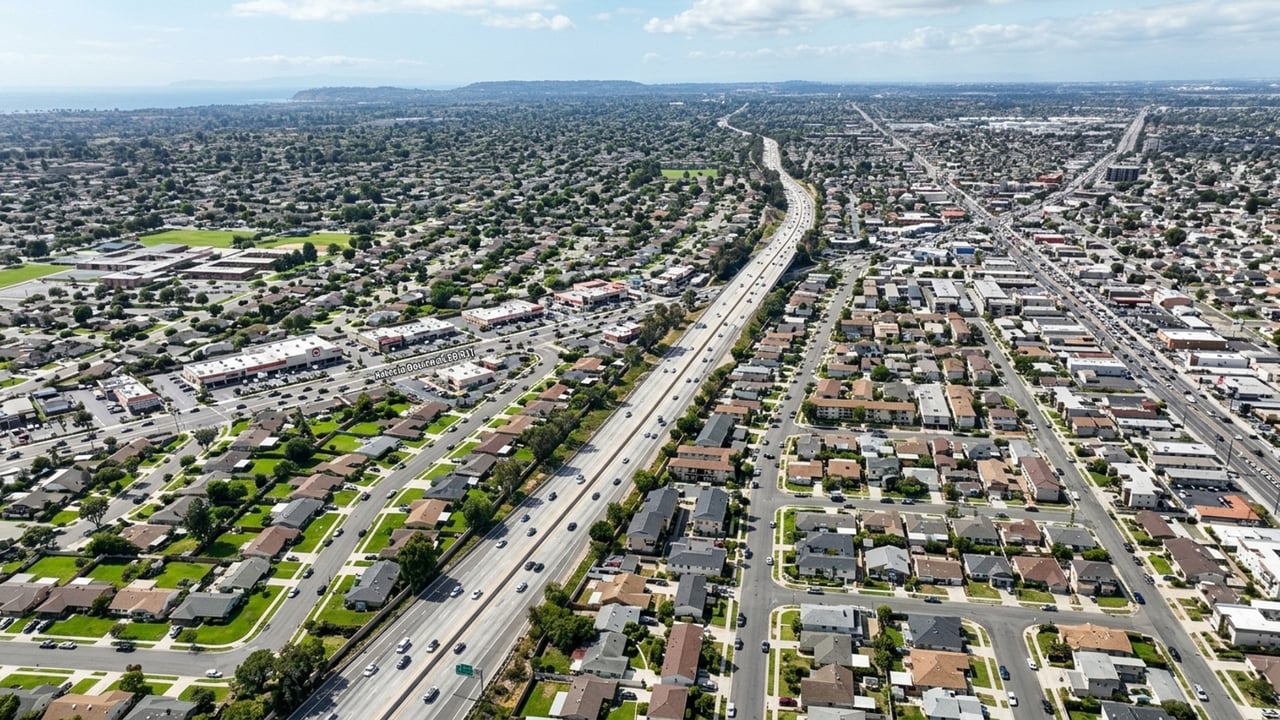
If you're shopping the South Bay and your search for the best neighborhoods in Torrance has narrowed to the inland areas, you're in good company. The citywide market isn't waiting around - median sale price sits at roughly $1.26 million, and homes are moving in just 25 days on average. That's the backdrop for everything else here.
North Torrance and Northwest Torrance are the two areas that come up most often for buyers in this part of the city. They share a border, they both connect to the major Los Angeles County commute routes, and yet they're not the same place - different entry points, different housing stock, different pace. Worth knowing before you start touring.
Understanding the Geography and Real Estate Markets
Both neighborhoods occupy the northern end of Torrance, with Redondo Beach, Lawndale, and Gardena forming the surrounding edges. That position puts residents close to the 405 freeway and the main surface-street grid running through the South Bay.
Citywide, inventory is tight - about 200 available homes and a 2.2-month supply as of mid-2026. Within the North and Northwest tracts specifically, both sides are active, but they attract slightly different budgets and property preferences. Knowing which one fits yours is the whole point of this breakdown.
Geographic Boundaries and Layout
North Torrance generally centers around the Artesia Boulevard corridor and runs toward the eastern side of the city. Northwest Torrance sits closer to the western edge, bordering Redondo Beach and organized more closely around Hawthorne Boulevard.
Both areas are predominantly residential, with wide, tree-lined streets feeding into the commercial arterials that run through the broader South Bay.
Overall Housing Market Trends
Across Torrance, homes are selling at about 101% of list price, and nearly half are closing above asking. That competitive pace applies to both the North and Northwest tracts - this isn't a buyer's market on either side of town.
Multiple offers are common. Come prepared with a pre-approval letter and a clear picture of recent comparable sales, or you'll be watching deals close without you.
Comparing Home Prices and Property Types
The financial entry point and the types of structures you'll find differ between these two areas. Both have mid-century construction in the mix, but the ratio of detached single-family homes to multi-family units is not the same - and that affects everything from your loan type to your resale pool.
Look at median sale prices alongside the architectural styles before you decide which side of town fits your situation. If you're pre-approved, you already have a ceiling - figure out whether that ceiling works better against North Torrance's higher median or Northwest Torrance's slightly lower one.
Recent Home Prices and Sales Data
North Torrance carries a median sale price of $1.1 million and a median price per square foot of $728. Homes here are averaging four offers and selling in roughly 13 to 25 days - it's a brisk market.
Northwest Torrance comes in at a median sale price of $995,000 across all home types, according to brokerage estimates and MLS data. The pace is measurably slower, with homes sitting anywhere from 35 to 53 days on average before closing.
Available Housing Styles and Layouts
North Torrance runs about 90% single-family. Most of what you'll see are 1950s mid-century ranch homes, though a number have been expanded or replaced by newer two-story builds over the years.
Northwest Torrance is a broader mix. The primary stock is medium to large single-family homes built between 1940 and 1969, but there's also a meaningful concentration of small apartment buildings - something you won't see as much of on the North side.
Daily Life, Commutes, and Local Zoning
In the Los Angeles Metro, commute time and proximity to commercial centers aren't afterthoughts - they're often what tips a decision. Both neighborhoods have real advantages here, and they're worth spelling out.
The City of Torrance manages commercial growth through specific zoning overlays, which keeps the residential streets fairly well buffered from the retail corridors. That's not an accident, and it shows in the day-to-day feel of both areas.
Getting Around Town and Freeway Access
Northwest Torrance has direct 405 Freeway access and sits along Hawthorne Boulevard, which carries approximately 52,000 cars per day. The Torrance Transit System also serves the area, running twelve fixed routes throughout the South Bay. The Walk Score in the Northwest area is 64 - moderately walkable for nearby errands, not a walking neighborhood in the urban sense.
North Torrance leans on Artesia Boulevard, which sees about 25,000 cars per day, and connects to both the 405 and the 110 freeways without much trouble. It's slightly less direct to the 405 than the Northwest side, but the access is still solid.
Commercial Zoning and Shopping Corridors
Northwest Torrance sits close to major commercial areas - restaurants, parks, and shopping centers are accessible without much driving. The city has formalized this with the Hawthorne Boulevard Overlay District, applying specific design and use standards across 568 acres to manage how that commercial strip redevelops over time.
In North Torrance, commercial activity concentrates along the Artesia, Hawthorne, and Crenshaw Boulevard corridors. West Artesia Boulevard in particular serves as the primary trade area for that side of town, with high-visibility storefronts doing most of the retail heavy lifting.
Evaluating Your Options in Torrance
Choosing between these two tracts comes down to recent sales data and a clear-eyed look at what the city's long-term planning actually says. The differences in housing stock and median prices are real and meaningful - not just rounding errors on a spreadsheet.
Before you make any offer, dig into the municipal resources and get a professional who knows the specific blocks, not just the zip code.
Using the City GIS and Planning Portals
The City of Torrance GIS Open Data Portal lets you pull up spatial information, maps, and zoning datasets for any property you're considering. You can look up specific boundaries and overlay districts before making an offer - which is exactly the kind of thing you want to know before, not after, you're in contract.
The Torrance planning division also maintains the General Plan and conducts land-use studies. Reading those documents gives you a sense of future development policies that could affect value down the road.
Partnering With a Local Agent
A good local agent pulls block-specific comparable sales that the standard online portals miss entirely. They can tell you whether a house in Northwest Torrance is priced fairly against that $995,000 median, or whether a North Torrance ranch home genuinely warrants a premium above it.
They also help you structure a competitive offer in a market where homes routinely sell above asking - and in Torrance right now, that's not a hypothetical.
Frequently Asked Questions
Is it more expensive to buy a home in Northwest Torrance compared to North Torrance, CA?
No. Northwest Torrance is generally less expensive, with a recent median sale price of $995,000. North Torrance commands a higher median of $1.1 million.
Which neighborhood offers a faster commute to the 405 freeway and the South Bay beaches?
Both areas connect to the 405, though the access looks a little different. Northwest Torrance has the 405 running directly through the area alongside Hawthorne Boulevard. North Torrance uses Artesia Boulevard to reach both the 405 and the 110 freeways.
Are the lot sizes and styles of homes different between the North and Northwest Torrance neighborhoods?
Yes, notably so. North Torrance is about 90% single-family homes, predominantly 1950s mid-century ranches. Northwest Torrance offers a broader mix - medium to large single-family houses alongside small apartment buildings, with most of the stock built between 1940 and 1969.
Are there specific traffic, refinery proximity, or noise factors to watch out for when looking at houses in North vs. Northwest Torrance?
Traffic volume is the primary factor worth flagging in both areas. Hawthorne Boulevard in Northwest Torrance carries approximately 52,000 cars per day. Artesia Boulevard in North Torrance sees around 25,000 vehicles daily - a meaningful difference if street noise matters to you.
Is the housing market more competitive and faster-paced for buyers in Northwest Torrance than in North Torrance?
No - North Torrance is the faster-moving market right now. Homes there sell in roughly 13 to 25 days and average four offers per listing. Northwest Torrance properties are averaging 35 to 53 days on the market before closing.