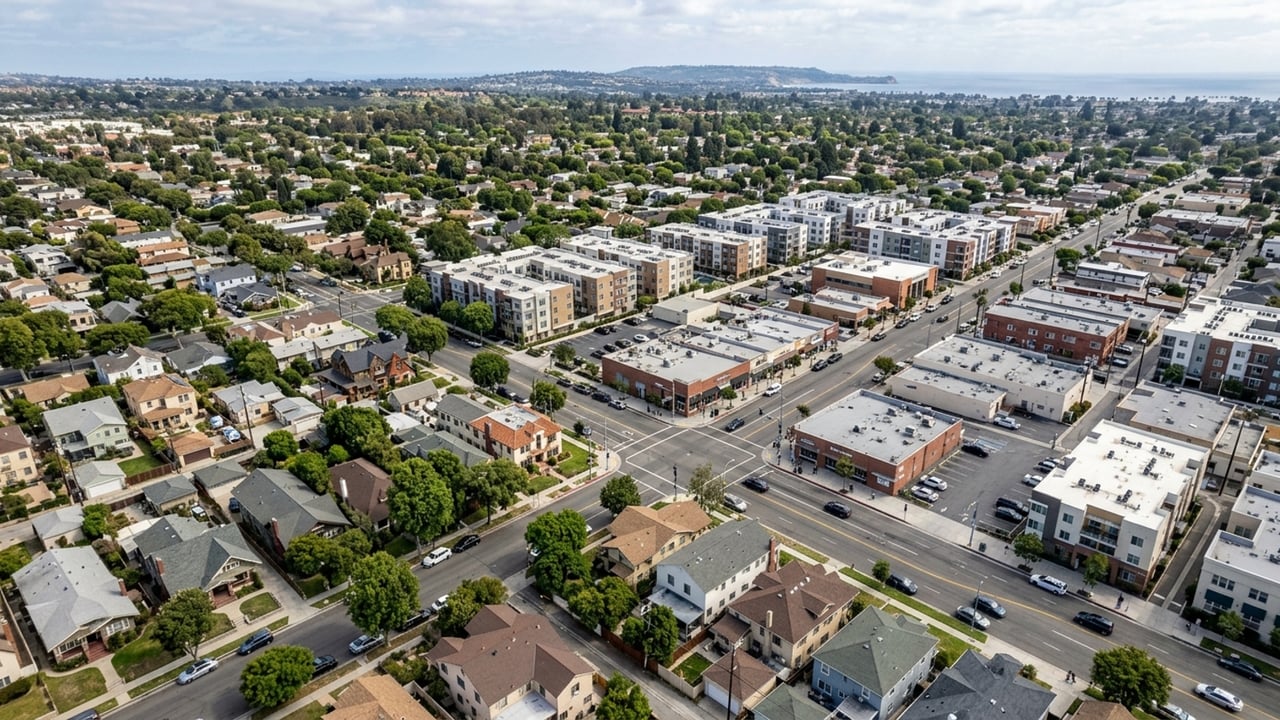
The broader Torrance real estate market has held steady demand throughout 2026, with the citywide median sale price sitting around $1,260,000. A lot of South Bay buyers searching for the best neighborhoods in Torrance zero in on the city's established subdivisions and move on - but the downtown core is a completely different conversation. Old Torrance, also known as the Olmsted District, grew up around a historic commercial hub laid out more than a century ago, and it still feels that way.
This is some of the oldest housing stock in Torrance - tree-lined streets, early-20th-century architecture, a pedestrian-friendly grid centered on Torrance Boulevard and Sartori Avenue. You're trading the post-war suburban layout for something with actual bones. Before you decide if that trade works for you, it helps to get specific about what's actually for sale here and what it costs.
The Layout and Character of Old Torrance
Frederick Law Olmsted Jr. laid out this commercial and residential core in 1912. The street grid revolves around historic Downtown Torrance, forming a distinct pocket that feels genuinely removed from the modern thoroughfares surrounding it. Several landmark structures from that original development period survive, including the Southern Pacific Railroad Bridge designed by architect Irving Gill.
The layout encourages walking in a way that most of the South Bay simply doesn't. Residential streets feed directly into the central business district, and the original streetscapes remain largely intact. If you care about historic preservation, that continuity is a real selling point - and it shows up in what you'll pay.
Historic Landmarks and Architecture
The 1912 Pacific Electric Railway Depot is the most recognizable structure in the district. Designed by Irving Gill, it now houses a local restaurant but continues to define the neighborhood's identity from the street. The blocks around it carry a mix of early- to mid-20th-century architectural styles that you won't find repeated elsewhere in the city.
Residential streets run heavy with Craftsman and California Bungalow designs from the 1920s and 1930s. Spanish Colonial Revival, Tudor, Prairie, and Ranch styles are mixed in among the cottages. That variety is exactly what separates this neighborhood visually from the uniform tract development that defines so much of Torrance built after World War II.
Housing Options and Prices in Old Torrance
Homes here generally sell for less than the citywide median, which is why the district draws consistent attention from South Bay buyers watching their budget. Recent data puts the neighborhood's median sale price at roughly $937,000, with median list prices around $724,000. For context, the broader Torrance market sits at a median sale price of $1,260,814 as of mid-2026 - so the gap is real.
Properties across the city average just 25 days on the market, and Old Torrance listings move at a similar pace. About 48% of Torrance homes sell above asking, which tells you something about inventory levels. Well-maintained bungalows in the historic core attract competitive offers. Don't assume the lower price point means less competition.
A Look at the Neighborhood's Home Types
Early-20th-century single-family homes dominate the supply. The 1920s and 1930s cottages and bungalows make up the bulk of the historic inventory, typically with smaller footprints and traditional floor plans that reflect when they were built - which is both the appeal and the practical reality.
The neighborhood isn't strictly historic houses, though. Post-WWII bungalows show up in the mix, and there are newer condo and townhome complexes scattered through the area. Those attached properties give buyers an alternative entry point - close to the downtown core, without the responsibility of maintaining a century-old house.
How Local Prices Compare to the Broader City
The price gap between Old Torrance and the rest of the city is significant. Torrance citywide figures range from roughly $900,000 to over $1.3 million depending on the index, and Old Torrance properties frequently close below the $1 million mark. That positions the neighborhood differently from South or West Torrance.
Worth understanding, though: the lower median largely reflects smaller square footage and older construction. A 1920s cottage costs less than a larger updated mid-century home in another part of the city for straightforward reasons. Fully restored historic properties in the downtown core can still command premium prices - the $937,000 median is a baseline, not a ceiling.
Daily Life, Dining, and Transit in the District
The commercial core at Torrance Boulevard and Sartori Avenue handles most day-to-day needs. You can walk from a residential street to local businesses, bakeries, and taverns - that level of pedestrian access is genuinely uncommon in the broader South Bay.
Transit connections extend out from there. The original railway infrastructure is long gone, but modern public transit routes still center on this historic hub.
Local Restaurants Along Sartori Avenue
The 1912 Pacific Electric Railway Depot now operates as The Depot, a well-known local restaurant that anchors the strip. Nearby, residents frequent Red Car Brewery and Local Kitchen, which runs as an American tavern.
Beyond those, the downtown footprint covers a solid range: Gaetano's Italian, La Capilla Mexican restaurant, Sartori Thai Kitchen, and El Pollo Inka are all within walking distance. Torrance Bakery remains a staple on the main commercial strip for morning coffee and pastries. It's a walkable lineup that residents use regularly, not just on weekends.
Commuting and Public Transportation
Torrance Transit provides low-cost bus service throughout the city, with routes running directly through the Old Torrance historic core. The system connects to major regional destinations including Redondo Beach and Long Beach, and commuters can use those routes to reach downtown Los Angeles, LAX, and SoFi Stadium.
The neighborhood's layout also means many residents handle daily errands on foot. For those driving, the central location gives fairly direct access to the broader Los Angeles freeway network.
Schools and Healthcare Serving the Area
Old Torrance sits within established service boundaries for both education and medical care. The neighborhood draws on broader city infrastructure, including a major regional medical center a few miles away. Both the school system and that medical center have histories that run parallel to the district's own - this is not a recently developed corner of Torrance.
Torrance Unified School District
The Torrance Unified School District serves Old Torrance residents as part of the broader Los Angeles County public school system, managing elementary, middle, and high school campuses across the city.
Torrance High School, established in 1917, is the most notable campus near the downtown core. Its early-20th-century architecture mirrors what you'll find throughout the neighborhood - which makes sense, given they grew up at the same time.
Torrance Memorial Medical Center
There's no large hospital inside Old Torrance proper. The primary facility serving the area is Torrance Memorial Medical Center at 3330 Lomita Boulevard, a nonprofit medical center operating between 401 and 512 beds depending on the specific facility count. It's been affiliated with Cedars-Sinai since 2018, and U.S. News & World Report ranks it among the top hospitals in the Los Angeles and South Bay region.
Buying a Property in the Neighborhood
With roughly 200 homes in active inventory across the entire city, finding something in a specific pocket like Old Torrance takes patience. Historic bungalows don't hit the market every day - the supply of early-20th-century homes is simply finite - so you need to be monitoring listings and ready to move when something comes up.
You'll also be competing with other buyers who want the same thing: a walkable downtown and a price point that sits below the citywide median. With homes averaging around 25 days on market citywide, the window between "listed" and "under contract" closes fast.
Reviewing Available Listings
Start by being clear with yourself about what you actually want. The 1920s cottages and Spanish Colonial homes offer real historical character, but older plumbing and electrical systems come with the territory. Budget for updates and get a thorough inspection.
If lower maintenance matters more to you, the newer condo and townhome complexes near the commercial core give you the same walkability without the upkeep that comes with a century-old house. Both paths exist here - they just require different buyers.
Working With a Local Agent
An agent who knows the Olmsted District can track incoming inventory before it reaches the broader market, which matters when supply is this tight. They can also put the $937,000 median sale price in context - fully renovated historic homes and properties needing significant work are priced very differently, and the median alone won't tell you which category you're looking at.
Ask your agent to walk you through contract timelines and the local disclosure requirements for older homes. In a fast-moving market with older housing stock, that paperwork matters.
Frequently Asked Questions
Do historic homes in Old Torrance qualify for Mills Act property tax savings?
Check with the city directly on any specific property. Not all older homes in the Olmsted District carry the historic designation required for these programs, so whether a particular 1920s or 1930s home qualifies is a question you need answered before you're under contract.
What are the city restrictions for renovating or expanding an older home in Old Torrance?
Renovating early-20th-century Craftsman or Spanish Colonial homes in the district often requires specific city approvals to maintain the neighborhood's architectural character. Review local zoning and preservation guidelines before you purchase - not after.
How do real estate prices in Old Torrance compare to neighborhoods like South or West Torrance?
Properties in Old Torrance generally sell for less. The neighborhood's median sale price sits around $937,000, while the broader citywide median reaches roughly $1,260,000.
What common inspection issues should buyers look out for when purchasing a 1920s or 1930s house in Torrance, CA?
Older cottages and bungalows frequently need updates to original electrical panels, plumbing lines, and foundations. Hire an inspector with specific experience in early-20th-century housing stock - this is not the situation for a generalist.
Are homes in the Old Torrance historic district typically assigned to Torrance High School?
The Torrance Unified School District handles all school assignments for the area. Torrance High School was established in 1917 and sits near the historic core, but verify exact zoning boundaries with the district - don't assume based on geography alone.
Is it difficult to find properties with large lots or modern multi-car garages in Old Torrance?
Yes. The 1920s and 1930s single-family homes in the Olmsted District were built on smaller lots designed for walkability, often with single-car detached garages. If you need expansive lots or a large attached garage, you'll likely have to look outside the historic core.