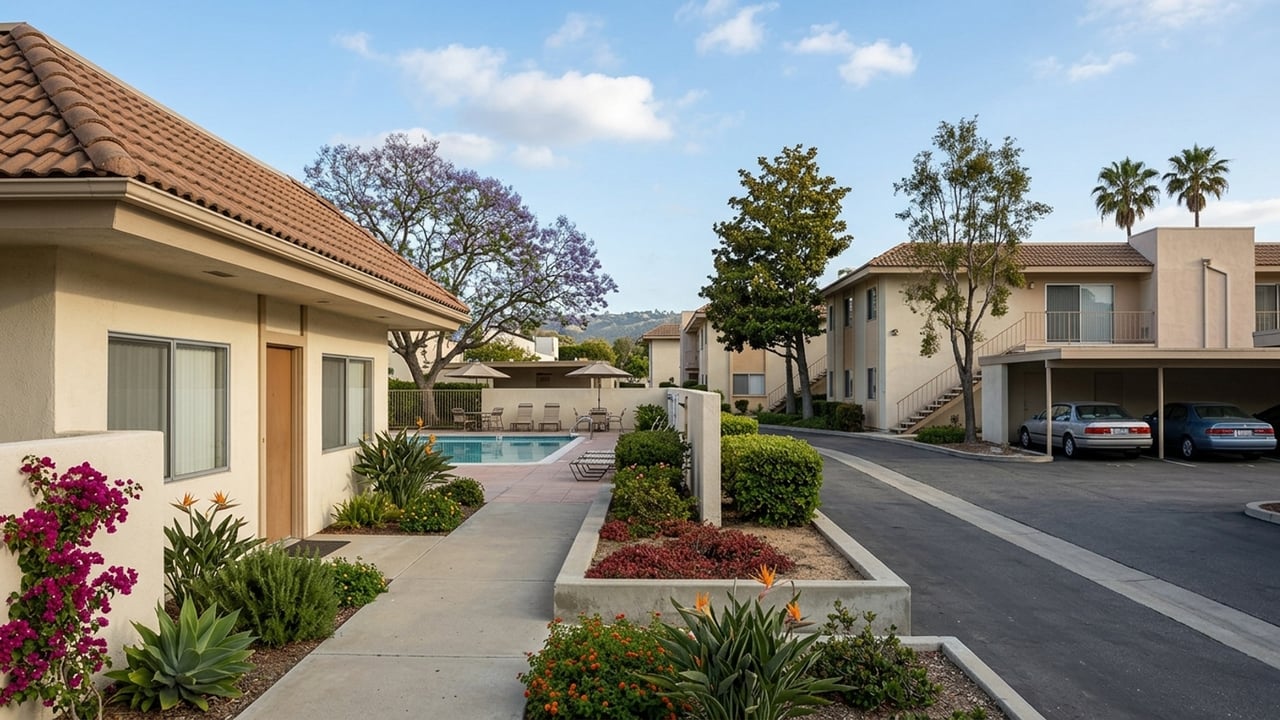
Torrance, CA has a lot going for it if you're an older adult thinking about staying in the South Bay and weighing the pros and cons of living in Torrance. The general housing market here runs at a median sale price of around $1,206,701, with homes typically going under contract in just 32 days - so the market moves fast regardless of what you're buying.
For seniors specifically, the options spread across a wide range: independent condo clusters, senior apartment rentals, mobile home parks, and full-service assisted living facilities. Knowing the difference between those categories - and understanding how the fees and ownership structures work - is what keeps buyers from ending up in the wrong fit for their budget and lifestyle.
Options for 55+ and Senior Living in Torrance
Senior housing in Los Angeles County breaks into several distinct categories, and the right one depends on a pretty simple question: do you want to own a home, rent an apartment, or pay for care services? Those are three very different financial and lifestyle commitments.
Most communities in California operate under the 80/20 rule - a federal and state standard that requires at least 80% of the occupied units in a designated 55+ community to have at least one resident who is 55 or older. That rule is what gives these communities the legal standing to restrict housing based on age.
Active Adult and Independent Living
Independent living communities are built for adults who want a lower-maintenance lifestyle without any medical or daily living assistance attached to it. You'll typically find shared amenities like pools, clubhouses, and organized social events. Residents usually own their condos or homes outright and pay a monthly HOA fee that covers exterior maintenance and shared facilities. It's a straightforward way to downsize from a larger single-family home while keeping full independence.
Assisted Living and Continuing Care
Assisted living facilities add a layer of daily support - meal preparation, medication management, personal care - on top of the housing itself. Several well-regarded options operate in Torrance, including Cogir of South Bay on Hawthorne Blvd, Clearwater at South Bay, and Oakmont of Torrance.
Continuing Care Retirement Communities, or CCRCs, take a tiered approach. Residents can move from independent living to assisted care or skilled nursing within the same campus as their needs change. These facilities typically require a larger upfront entrance fee on top of the monthly rent or care charges.
Senior Apartments and Mobile Home Communities
For renters or buyers looking for more affordable homeownership, Torrance has senior apartments and age-restricted manufactured home parks worth knowing about. Torrance Gardens Mobile Home Park at 22516 S. Normandie Avenue is a 55+ community with 63 lots, built around 1959 and 1960.
Skyline Mobile Home Park on Pacific Coast Highway is larger, with 265 sites, and has historically operated as a 55+ community - though recent listings suggest it's transitioning to an all-ages park. Verify the current age restrictions directly with park management before you make any moves on a unit there.
Featured 55+ Communities in the South Bay Area
Senior housing in Torrance isn't scattered evenly across the city. South and Central Torrance along Sepulveda Boulevard is the primary hub for 55+ developments, and if you're focused on that corridor, you'll find communities like Courtyard Villa Estates, Pacific Village, and Trade Winds - all with close proximity to local shopping centers, medical offices, and major transit routes.
Condo Clusters and Estates
Outside the Sepulveda corridor, Old Torrance has 55+ condo clusters worth a look - Parkview Court near Wilson Park being one of them. Central Torrance is home to established developments like New Horizons and The Gables.
These communities generally offer single-level living or elevator access, mature landscaping, and established resident boards. For buyers who want to avoid stairs, they're often the most practical option.
Luxury and Assisted Facilities
At the higher end of the market, Cogir of South Bay and Oakmont of Torrance blend independent apartments with assisted living services - on-site dining rooms, scheduled transportation, and round-the-clock staff. These facilities run primarily on a rental basis, and the higher monthly costs reflect everything that's bundled in: utilities, meals, housekeeping, and access to care staff.
What Does 55+ Living Cost in Torrance?
The range is wide. Whether you're buying or renting, and what level of care you need, will determine where you land financially. For context on the broader market: homes in Torrance frequently sell slightly above asking, with a recent average sale-to-list ratio of 100.94%.
For 55+ buyers, association dues come on top of a mortgage. For renters, base rent is just the starting point - care services add to it. State programs like Medi-Cal may help cover certain assisted living costs for those who meet specific income and asset thresholds, but eligibility requirements apply.
Renting vs. Buying
The average rent for a senior 55+ apartment in Torrance runs about $2,875 per month. Break that down by layout and you're looking at studios averaging around $2,039, one-bedrooms at $2,471, and two-bedrooms at approximately $3,327.
Buying a condo in a 55+ community means a traditional mortgage or cash purchase, plus ongoing property taxes and maintenance fees. Renting keeps things flexible and avoids the upfront costs of ownership, but it leaves you exposed to annual rent increases - something worth thinking through carefully on a fixed income.
Entrance Fees and HOA Dues
Homeowners in Torrance's 55+ communities pay monthly HOA fees to maintain the grounds and shared amenities. At New Horizons South Bay, those fees range from roughly $316 to $560 per month; similar complexes in the area charge around $540 monthly based on late 2025 data.
Full-service CCRCs and certain luxury assisted living facilities may also require an upfront entrance fee. That one-time payment secures your spot in the community and guarantees access to higher levels of care if your medical needs change down the road.
Pros and Cons of Torrance 55+ Communities
Moving into an age-restricted community changes your daily environment and your financial obligations at the same time. The South Bay's mild climate and solid local infrastructure are genuine draws for older adults. But Los Angeles County's cost of living is real, and it doesn't get easier on a fixed income.
The Benefits of South Bay Senior Living
Residents in Torrance 55+ communities get access to amenities built around their actual needs - accessible building designs, organized social activities, and an environment that isn't oriented around young families or college students. The age restriction creates a quieter setting by design.
Downsizing into a condo or mobile home park also shifts the maintenance burden off your plate. The HOA handles exterior repairs, landscaping, and pool upkeep.
Common Downsides to Consider
The rules in age-restricted communities are strict about who can live in the home. If an adult child or younger family member needs to move in with you, the community's bylaws may not allow it. That's a real constraint that some families don't think through until it becomes a problem.
The financial side has its friction points too. Rising HOA fees, upfront entrance deposits at CCRCs, and the overall cost of assisted living can put serious pressure on fixed retirement incomes over time.
Frequently Asked Questions
Is Torrance, CA a good place to retire?
Torrance offers a mild coastal climate, proximity to the South Bay beaches, and established medical facilities. That said, the general median home price sits around $1,206,701, so retirement budgeting here needs to be deliberate.
What is the average rent for 55+ apartments in Torrance?
The average rent for a 55+ apartment in Torrance is about $2,875 per month. Studios average $2,039, one-bedrooms run $2,471, and two-bedroom units cost approximately $3,327.
What is the 80/20 rule in a 55+ / retirement community?
It's the standard that requires at least 80% of the occupied units in a designated 55+ community to have at least one resident who is 55 or older. That's what gives these communities the legal standing to restrict housing based on age.
Is it better to rent or buy in a 55+ community in Torrance?
It depends on your financial situation and timeline. Buying builds equity and locks in your monthly housing payment; renting keeps things flexible and sidesteps the property taxes and HOA fees that come with owning in Los Angeles County.
What is the downside of a 55+ community?
Two main ones: the age rules restrict who can live with you, and the monthly fees are ongoing. HOA dues at places like New Horizons South Bay can reach up to $560 per month - that's a permanent line item in your budget.
What should I look for when touring a retirement community in Torrance?
Ask for a full breakdown of monthly fees and what's covered - utilities, care services, all of it. You'll also want to review the community rules on guests, pets, and how future rent or HOA fee increases are handled.