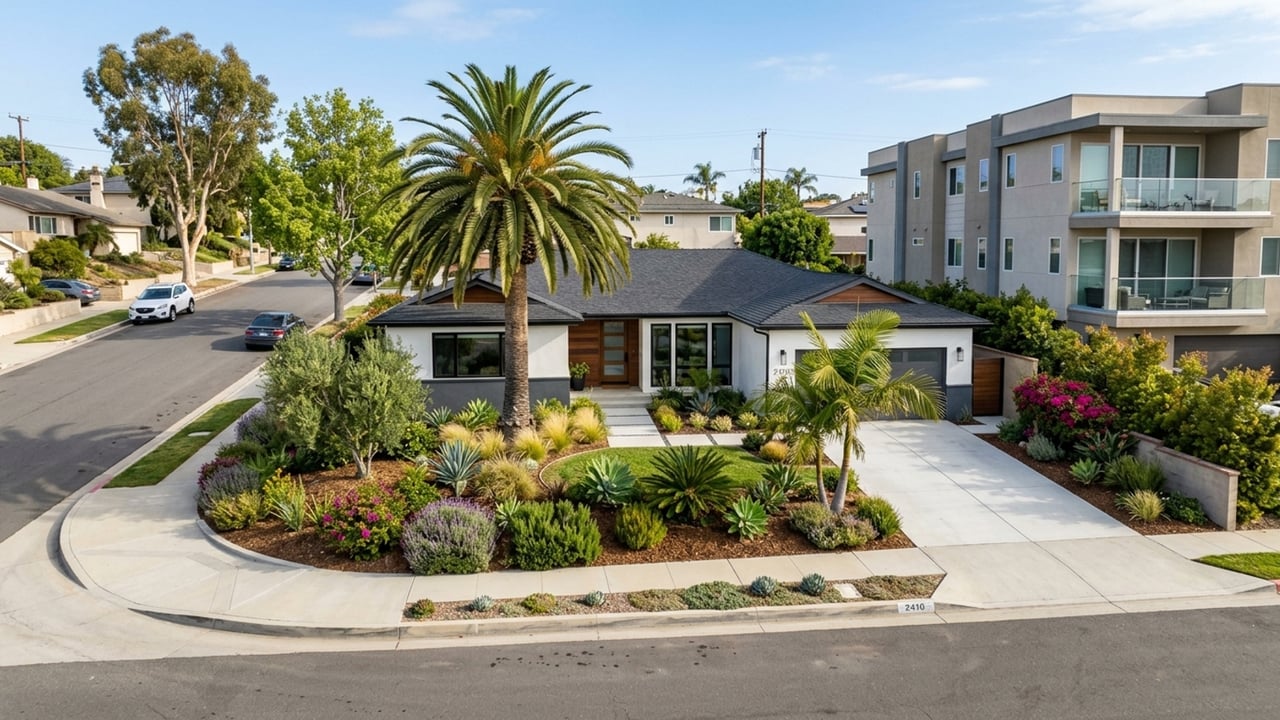
The median sale price for a home in Torrance, CA sits around $1,260,000 as of mid-2026, with properties spending roughly 25 days on the market. Buyers often start by researching the best neighborhoods in Torrance, CA. If you're weighing the city's northern and southern neighborhoods against each other, you're not alone - that's the most common question I hear from buyers trying to figure out where their budget actually lands.
Torrance gives you solid access to Los Angeles and the coast, but the price point and housing stock shift considerably depending on which side of the city you're in. Here's what the data actually shows.
Real Estate Markets in South and North Torrance
Inventory across Torrance is tight. Mid-2026 figures show about 200 active listings and 2.2 months of supply - that's a seller's market, and nearly half of all properties are closing above asking price. You'll want to come in prepared.
Where things get interesting is the gap between the two areas. South Torrance carries some of the highest prices in the city. North Torrance gives buyers a more realistic entry point if a detached single-family home is the goal.
Home Prices in South Torrance
South Torrance is expensive, and it doesn't apologize for it. The median home price here reached $1,495,000 in late 2025, with the 12-month trailing median sale price sitting at $1,400,000.
Plan your down payment and monthly carrying costs accordingly. Homes move quickly, which tracks with the city-wide pace, so if you find something you like, hesitation is usually costly.
Home Prices in North Torrance
If South Torrance's numbers are stretching the budget, North Torrance is worth a serious look. A local-agent analysis of 78 closed MLS sales in the first half of 2026 put the median sold price here at roughly $1,050,000.
That's a meaningful discount - around $350,000 less than the southern median - and you're still buying within Torrance city limits with a detached house.
Housing Styles and Inventory
North Torrance is almost entirely single-family. About 90% of recent sales are detached houses - mostly 1950s mid-century ranch homes, though some have been built out into two-story properties over the years.
South Torrance runs a similar base of mid-century ranch-style homes on the residential blocks, but the mix is slightly broader. You'll find updated condos and townhomes in the inventory too, particularly near the major roads. It's not a dramatic difference, but it's worth knowing before you start touring.
Property Taxes and Cost of Living
Los Angeles County uses a base property tax rate of 1% of assessed value under Proposition 13, but that's never the final number. Voter-approved local bonds and special assessments get layered on top, and they vary by location.
The exact tax rate area determines what you actually pay, so verify the specific assessments on any property before you make an offer - don't rely on the baseline.
Local Tax Rates in Los Angeles County
The typical all-in effective rate across Los Angeles County areas runs about 1.1874% of assessed value. Within Torrance specifically, that rate ranges roughly from 1.1173% to 1.2691% depending on the tax rate area.
South Torrance's higher median purchase price means the annual tax bill in dollars will be larger there than in North Torrance, even at the same effective rate. Run the math on the actual neighborhood average, not the city-wide median.
HOA Fees and Ownership Costs
South Torrance's larger share of condos and townhomes means HOA fees enter the picture more often for buyers in that area. If you're looking at attached housing there, pull the HOA financials early - it affects your monthly budget and your financing.
North Torrance is predominantly detached single-family homes, so most buyers won't deal with monthly dues. You'll own the exterior maintenance and landscaping costs directly instead.
Commutes, Transit, and Local Amenities
The I-110 (Harbor Freeway) and the I-405 are your primary connections to the rest of Los Angeles from anywhere in Torrance. Downtown, LA is about 19 to 20 miles out - a 22 to 30 minute drive in normal traffic.
Rush hour is a different story. That same drive can stretch to 75 minutes. LAX via the I-405 runs about 15 to 20 minutes, while Long Beach or Orange County trips land somewhere between 30 minutes and an hour depending on conditions.
Getting Around Town and to Los Angeles
If you'd rather skip the freeway, Torrance Transit runs the Line 4X and Line 3 bus routes into Downtown, LA - plan on approximately 75 to 90 minutes per trip. It's not fast, but it's an option.
Pacific Coast Highway (Highway 1) runs along the western and coastal edge of the city. For residents in that corridor, it's a useful north-south alternative that keeps you off the inland freeways entirely.
Parks, Recreation, and Shopping
North Torrance puts you near Columbia Park, a 52-acre facility with fields, bocce, roller hockey, and a cherry-blossom walking path. El Camino College, the Alondra Park golf course, and shopping at the South Bay Galleria and Torrance Promenade are all close by.
South Torrance and the Del Amo area border the Del Amo Fashion Center, one of the largest malls in the country. You're also near Torrance Memorial Hospital, the local airport, and the Strand bike and walking path that runs along the coast near Torrance Beach.
Frequently Asked Questions
How much of a price difference is there between buying a home in South Torrance versus North Torrance?
It's a significant gap. Early 2026 sales data puts North Torrance at a median of roughly $1.05 million, while South Torrance properties are sitting closer to $1.4 million. That's about $350,000 separating the two areas.
Which area offers a better daily commute to Los Angeles or the South Bay beaches, North or South Torrance?
Both areas lean on the I-110 and I-405 to get into Los Angeles, and both face the same rush-hour reality - up to 75 minutes at peak times. For beach access, the western and southern edges of Torrance connect directly to the Strand bike and walking path along the coast.
Are there noticeable differences in average lot sizes and home styles when choosing between North and South Torrance, CA?
Yes. North Torrance is almost entirely 1950s mid-century detached ranch homes - around 90% of recent sales are detached. South Torrance has a similar base of single-family ranches but mixes in updated condos and townhomes, particularly near the main roads.